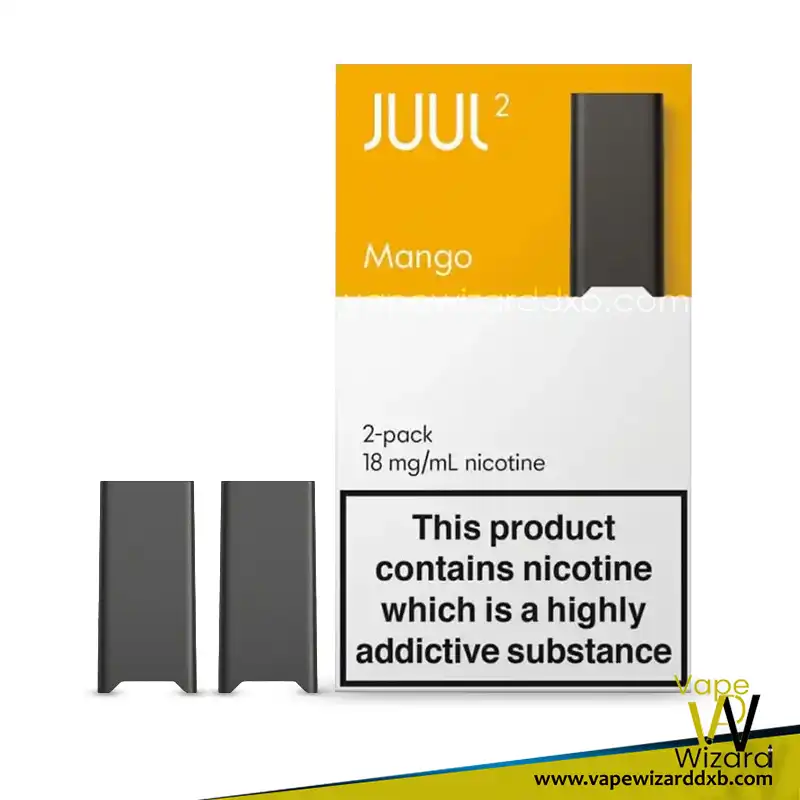
Mango JUUL 2 Pods sit in a very specific corner of the UAE nicotine market: adult users who already want a closed pod system, already use the right device, and care about flavour enough to seek a fruit option rather than defaulting to mint or tobacco. That makes this less a story about hype and more a story about how the local pod category is settling around compatibility, compliance, and repeat purchase behaviour tied to juul 2 pods.
For this piece, the reporting basis is limited and straightforward. It draws on visible UAE retail listings reviewed in early 2026 across major online specialist sellers serving the Emirates, manufacturer product information on the JUUL2 system and pod compatibility, and the public UAE standards framework that governs electronic smoking devices and related liquids. That is enough to describe what adult buyers can verify, but not enough to claim national flavour rankings or precise sales share for mango juul 2 pods.
That distinction matters. In a regulated nicotine category, flavour chatter alone tells you very little unless you also ask whether the product is officially part of the device range, whether local sellers present it consistently, and whether buyers can check authenticity and legal sale conditions before spending their money.
The Current State of the Market
Mango JUUL 2 Pods are best understood as a product-level availability story, not proof of a nationwide flavour craze. JUUL2 is a closed pod system, so the first factual point is compatibility: JUUL2 pods are designed for the JUUL2 device, not the earlier JUUL device. That sounds obvious, but it is exactly the kind of detail that causes wasted purchases in pod categories, especially where old and new device names sit side by side in retail search results.
Manufacturer status also matters here. Adult UAE buyers should treat Mango as part of the JUUL2 flavour line only if it is presented as an official JUUL2 pod variant by the brand and sold through age-gated channels. A product page alone is not enough. In practice, the safer buying routine is to check that the packaging names the JUUL2 system clearly, that the pod format matches the device, and that the seller is transparent about nicotine product age restrictions and fulfilment terms.
What can be said from UAE retail checks in early 2026 is narrower than many trend pieces suggest. Mango JUUL 2 Pods are listed by specialist online sellers serving the UAE, often alongside tobacco and mint options within the same JUUL2 category rather than buried as a novelty add-on. That suggests the product is being treated as a standard line item within the system. It does not prove how fast it sells, nor whether it outsells more traditional flavours.
There is also a compliance angle that buyers sometimes miss. The UAE permits regulated electronic smoking products under a standards-led framework, with product sale and import tied to conformity requirements rather than a free-for-all retail model. For the consumer, that translates into a simple habit: buy only from sellers that state age restrictions, identify the exact product, and do not blur the line between pod systems, disposables, and unrelated heated tobacco products.
If you strip away the noise, the current market position is fairly clear. Mango JUUL 2 Pods appear to be a recognised flavour option within a branded closed-pod ecosystem that adult UAE users can find through specialist channels. What remains unproven is scale. Availability is visible, but popularity in the strict statistical sense is not publicly documented.
What’s Driving Demand
The strongest driver is not mango on its own. It is the combination of a familiar fruit flavour with a low-fuss device format. Closed pods appeal to adult users who want a product that is quick to swap, easy to carry, and cleaner than refillable kits that involve bottles, coils, or a pocket that eventually smells like leaked liquid.
In that context, mango occupies a useful middle ground. Tobacco flavours often appeal to adults looking for something closer to a traditional smoking profile. Mint works for users who want a colder, sharper finish. Mango offers a softer alternative that still feels mainstream. It is fruit-forward without drifting into the dessert-style naming that some adult buyers actively avoid.
A practical example helps. Think of an office worker in Dubai Marina or Abu Dhabi who already uses a closed pod device and buys nicotine products online for convenience. That person may not be chasing novelty at all. They may simply want one tobacco or mint option for routine use and one fruit option to rotate in during the week. In that kind of buying pattern, a mango pod does not need to dominate the category to justify its place.
Another driver is reduced appetite for maintenance. Over the past few years, plenty of experienced nicotine users have discovered that tinkering with refillables is enjoyable right up until it becomes annoying. Replacing pods is simpler. The trade-off, of course, is less flexibility and more dependence on one proprietary ecosystem. If your preferred pod goes out of stock, your fallback options shrink quickly.
Price sensitivity also influences demand, even if public UAE pricing moves over time. Closed pod users usually know they are paying for convenience and a branded format. That means flavour demand tends to be steadier when the flavour feels dependable enough to repurchase, not merely interesting enough to try once. Mango seems to fit that description, which may explain why it keeps appearing as a regular option in specialist assortments.
Popularity Across the Emirates
Claims about flavour popularity by emirate are usually far weaker than they sound, so this section needs tighter framing. There is no public dataset showing that Mango JUUL 2 Pods are more popular in Dubai than in Sharjah, or stronger in Abu Dhabi than in Ajman. What can be discussed more honestly is distribution and visibility across the Emirates.
In early 2026, UAE-facing specialist websites shipping nicotine products commonly present national delivery coverage or broad delivery reach rather than emirate-specific flavour charts. That means an adult buyer in Ras Al Khaimah may see the same online JUUL2 flavour menu as a buyer in Dubai, even if the underlying warehouse, courier speed, or same-day options differ. The key difference is access, not proven local preference.
Dubai and Abu Dhabi do still matter, but mainly because they concentrate more specialist retail operations and fulfilment capacity. That tends to make product discovery easier. A buyer can compare listings, packaging photos, stock notices, and device categories more quickly there because the retail ecosystem is denser. That is a distribution advantage, not a documented taste difference.
For the smaller emirates, online retail narrows the gap. If a specialist seller delivers nationally and keeps the JUUL2 category current, a product like Mango JUUL 2 Pods can achieve broad visibility without needing heavy physical shelf presence in every location. That is why “popularity across the Emirates” can easily be overstated. What is really broader is exposure.
The fair reading is this: Mango JUUL 2 Pods are visible to adult buyers across the UAE because specialist e-commerce has flattened part of the market. What we cannot say from public evidence is that one emirate is driving the trend. The regional story is mostly about where retail infrastructure is strongest and where delivery makes repeat buying easiest.
Who’s Adopting It and Why
Without consumer survey data or disclosed sales breakdowns, broad claims about adopter demographics would be guesswork. A better approach is to describe the product-use cases that make Mango JUUL 2 Pods a plausible fit for certain adult nicotine users already in the market.
The first use case is the existing JUUL2 user who wants variety inside the same ecosystem. That buyer has already accepted the proprietary format, already owns the compatible device, and is not comparing every purchase against the full open-system market. For them, mango is simply one rotation choice within a known setup.
The second use case is the adult user moving away from more fiddly devices. This is common enough in specialist retail conversations even if it is rarely captured in hard public data. Some buyers start with refillables, decide they are tired of charging larger kits, changing coils, or carrying liquid, then settle into closed pods because the routine is easier. A fruit flavour like mango can make that transition feel less repetitive than staying only with tobacco notes.
A third use case involves adults who use more than one nicotine format, but this needs a legal and technical distinction. Pod vaping and heated tobacco are not the same category. A heated tobacco device warms processed tobacco sticks or units. A JUUL2 device uses prefilled e-liquid pods. Some adult users may move between those categories in real life, but that does not make them a single market or interchangeable product family. The appeal of mango in a pod format, for such a user, would be flavour contrast and convenience rather than product equivalence.
Who is not part of this story is just as important. This is not a product for minors, non-smokers, or anyone looking for a harmless lifestyle accessory. It is a nicotine product for adults. That may sound blunt, but it keeps the discussion grounded where it belongs.
What the Trend Signals
If Mango JUUL 2 Pods continue to hold shelf space and online category presence, the bigger signal is not that fruit flavours are taking over the UAE. It is that the market appears to reward products that are easy to classify, easy to reorder, and attached to recognised device ecosystems.
That matters because the UAE nicotine market is less tolerant of vague product identity than some casual observers assume. Buyers increasingly want to know exactly what device a pod fits, whether the packaging looks correct, whether the seller is clearly age-gated, and whether the product sits inside a legal retail framework. A flavour that survives in that environment is doing more than attracting curiosity. It is clearing a practical threshold.
Mango also shows how flavour demand has matured. Earlier market chatter around vaping often treated fruit as shorthand for novelty. In a closed-pod system, that is too simplistic. A fruit flavour can become routine if it is consistent, recognisable, and available often enough that users can factor it into regular purchases. That does not make it dominant. It makes it established.
The caution is that closed-pod strength always comes with dependence on the ecosystem. You are not only choosing a flavour, you are choosing the continued availability of that flavour in one branded format. If supply tightens or the line changes, the inconvenience is immediate. Refillable users can adapt more easily than closed-pod users can.
So the trend signal is mixed but useful. The UAE market seems to be favouring clarity over chaos. Products that remain visible are usually the ones that fit a defined system and a repeatable buying routine. Mango JUUL 2 Pods fit that pattern well enough to matter, even if public evidence stops far short of crowning them the flavour of the country.
Looking Ahead to 2026
The legal backdrop will shape this category more than social buzz will. In the UAE, electronic smoking devices and related e-liquids have been regulated through a standards framework overseen at national level, with the Emirates Authority for Standardization and Metrology having set the original path before its functions moved into the current federal standards structure. For buyers, the practical effect is that lawful market status depends on compliant product supply and sale, not on whether a flavour happens to be trendy online.
That matters for Mango JUUL 2 Pods specifically. Adult users should expect lawful retailing to include age-gated sale conditions, clear product naming, and separation between e-liquid pod systems and heated tobacco products. The two categories may compete for the same adult nicotine budget, but they remain technically and commercially distinct. Treating movement between them as automatic misses how differently people use them and how differently products are sold.
Looking through the rest of 2026, the most plausible direction is continued sorting around trusted formats. Sellers that can clearly present compatibility, authenticity cues, and stable category ranges will likely hold attention better than sellers chasing random flavour novelty. That environment tends to help established branded pod lines more than experimental one-offs.
For Mango JUUL 2 Pods, that does not guarantee expansion. The biggest variables remain ordinary ones: whether authorised flavour naming remains consistent, whether pods stay easy to source through compliant sellers, and whether adult users continue to see mango as worth repurchasing rather than trying once. Those are mundane market forces, but they usually decide this category.
The likely outcome is a steadier, more selective market. Adult UAE users who already prefer closed pods may keep products like Mango JUUL 2 Pods in rotation because they are simple, familiar, and system-specific. But the future of vaping in the UAE will be shaped less by one flavour than by regulation, trust in sellers, and whether buyers can still find the exact product that fits the exact device they already own.
FAQ
Do Mango JUUL 2 Pods work with older JUUL devices?
No. JUUL2 pods are made for the JUUL2 device ecosystem. Adult buyers should check compatibility carefully before ordering.
Are Mango JUUL 2 Pods officially part of the JUUL2 range?
Buyers should verify flavour naming and packaging against current manufacturer information and buy only from age-gated specialist sellers that identify the product clearly.
Is there proof that Mango JUUL 2 Pods are one of the top-selling flavours in the UAE?
Not from public data. Retail visibility suggests they are an established option, but flavour-level national sales figures are generally not disclosed.
Are pod systems and heated tobacco the same thing?
No. Pod systems use e-liquid pods, while heated tobacco devices use tobacco units designed to be heated. Some adult users may alternate between them, but they are different product categories.